Gluten-Free Egg Noodles bring back the comfort of traditional homemade pasta without relying on wheat flour. Soft, pliable, and gently chewy, these noodles cook up tender and satisfying, making them perfect for soups, casseroles, or simple buttered bowls.
Many store-bought gluten-free pastas can feel brittle or overly firm, but homemade Gluten-Free Egg Noodles offer a fresh texture that’s both delicate and hearty. The combination of gluten-free flour and eggs creates a dough that rolls beautifully and holds together during cooking.
Whether you’re preparing a comforting chicken noodle soup or a rich stroganoff, these noodles provide the familiar texture you crave while keeping your meal completely gluten-free. With just a few ingredients and simple steps, you can enjoy fresh egg noodles right from your own kitchen.
Ingredients Overview
The key to successful Gluten-Free Egg Noodles lies in choosing the right flour blend. A high-quality gluten-free all-purpose flour that contains xanthan gum works best. Xanthan gum acts as a binder, replacing the elasticity that gluten normally provides. If your blend does not contain xanthan gum, add ½ teaspoon per cup of flour to help the dough hold together.
Eggs are essential for structure and richness. They provide moisture, binding power, and that classic egg noodle flavor. Large eggs at room temperature incorporate more smoothly into the dough.
A small amount of olive oil adds flexibility and prevents the dough from becoming too dry or crumbly. It also contributes a subtle richness to the finished noodles.
Salt enhances flavor and balances the natural taste of the flour and eggs. Because gluten-free flour can sometimes taste slightly neutral, proper seasoning is important.
If the dough feels dry during mixing, a teaspoon or two of water can be added gradually. The texture should be firm but pliable, not sticky or crumbly.
Together, these ingredients create Gluten-Free Egg Noodles that are sturdy enough to boil yet tender when served.
Step-by-Step Instructions
Start by placing 2 cups of gluten-free all-purpose flour in a large mixing bowl. Add ½ teaspoon salt and stir to combine evenly.
Create a well in the center of the flour. Crack 3 large eggs into the well and add 1 tablespoon olive oil.
Using a fork, begin whisking the eggs gently, gradually pulling in flour from the edges. Continue mixing until a shaggy dough begins to form.
Once the dough becomes too thick to mix with a fork, use your hands to bring it together. Press and fold the dough until it forms a cohesive ball. Gluten-free dough does not require the same kneading as wheat dough, but it should be worked gently for 2–3 minutes to ensure even hydration.
If the dough feels dry or cracks easily, add water one teaspoon at a time. If it feels sticky, sprinkle in a small amount of flour.
Wrap the dough tightly in plastic wrap and let it rest at room temperature for 20–30 minutes. Resting allows the flour to fully absorb moisture, making the dough easier to roll.
After resting, lightly dust a clean surface with gluten-free flour. Divide the dough into two portions for easier handling.
Roll one portion at a time to about 1/8-inch thickness. Because gluten-free dough can be delicate, roll gently and evenly. If you have a pasta roller, you may use it on a moderate setting.
Once rolled, dust lightly with flour and fold the dough loosely into thirds. Using a sharp knife or pizza cutter, slice into strips about ¼ inch wide for classic egg noodles.
Unfold the strips and lay them flat to prevent sticking. Repeat with the remaining dough.
To cook, bring a large pot of salted water or broth to a gentle boil. Add the noodles and cook for 3–5 minutes, depending on thickness. Stir gently to prevent sticking.
The noodles are done when tender but still slightly firm. Drain carefully and serve immediately.
Tips, Variations & Substitutions
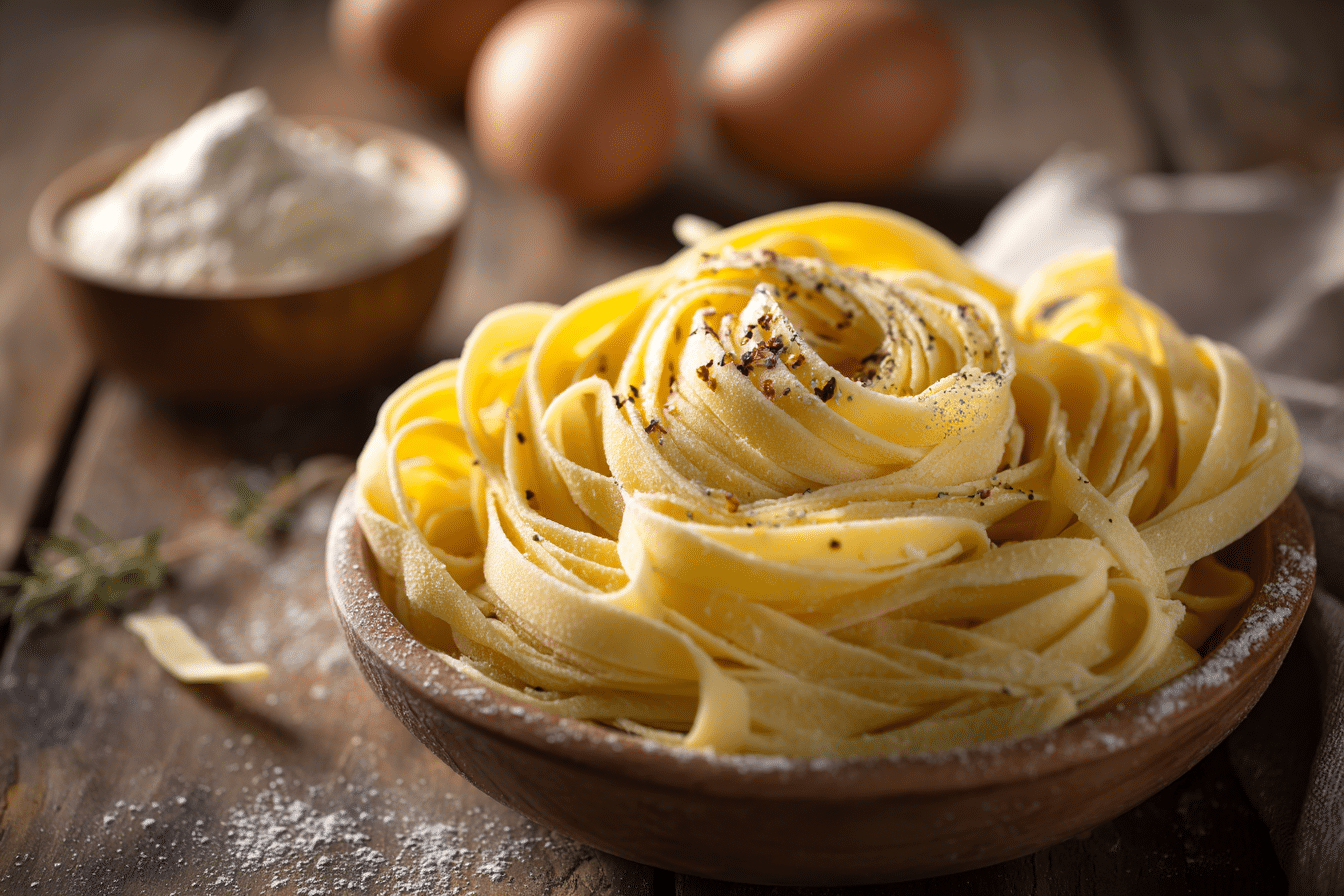
For a richer flavor, add one extra egg yolk to the dough. This creates slightly more tender and golden noodles.
If you prefer a different flour blend, look for one specifically designed for pasta or baking. Avoid single-flour options like almond or coconut flour, as they lack the necessary structure.
For dairy-free meals, this recipe already contains no dairy. Simply cook the noodles in broth or toss with olive oil instead of butter.
You can dry the cut noodles for 1–2 hours at room temperature before cooking if you prefer a slightly firmer texture.
For herb-infused noodles, mix in 1 teaspoon of finely chopped fresh parsley or thyme.
Gluten-Free Egg Noodles can also be cut into wider strips for pappardelle-style pasta or shorter pieces for soups.
Serving Ideas & Occasions
Gluten-Free Egg Noodles shine in classic chicken noodle soup, absorbing savory broth while staying tender.
They pair beautifully with creamy mushroom sauces, beef stroganoff, or simple garlic butter and herbs.
For a lighter option, toss them with sautéed vegetables and olive oil. Their soft texture complements roasted vegetables and light sauces.
These noodles are ideal for family dinners, holiday meals, or whenever you want a comforting homemade touch without gluten.
Because they cook quickly, they’re also suitable for weeknight meals when you need something warm and satisfying without long preparation.
Nutritional & Health Notes
Gluten-Free Egg Noodles provide protein from eggs and carbohydrates from gluten-free flour. They are suitable for individuals with gluten sensitivity or celiac disease when prepared with certified gluten-free ingredients.
Compared to traditional wheat noodles, the nutritional profile depends on the flour blend used. Some blends include rice flour, potato starch, or tapioca flour, each contributing different textures and nutrient levels.
Eggs offer essential nutrients such as B vitamins and choline. Portion size should be considered when pairing with rich sauces.
Because these noodles are homemade, you have full control over ingredients and can select high-quality flour blends to meet your dietary needs.
FAQs
1. Why is my gluten-free dough cracking?
Gluten-free dough often cracks if it lacks moisture. Add small amounts of water and knead gently until the dough becomes pliable. Resting the dough also improves flexibility.
2. Can I freeze Gluten-Free Egg Noodles?
Yes. After cutting the noodles, lay them flat on a baking sheet and freeze until firm. Transfer to a freezer-safe bag. Cook directly from frozen, adding an extra minute to the cooking time.
3. Do I need xanthan gum?
If your flour blend does not include xanthan gum, adding a small amount helps bind the dough. Without it, the noodles may break apart during cooking.
4. Can I use a pasta machine?
Yes. A pasta machine makes rolling easier and more uniform. Start on a thicker setting and gradually reduce thickness to avoid tearing.
5. How long do fresh noodles last?
Uncooked noodles can be refrigerated for up to two days in an airtight container. For longer storage, freezing is recommended.
6. Can I make these noodles without eggs?
Eggs are essential for structure in this recipe. Egg substitutes may work, but the texture will differ significantly.
7. Why are my noodles mushy?
Overcooking is usually the cause. Gluten-free noodles cook quickly, so test them after three minutes and remove as soon as they are tender.
Print
Gluten-Free Egg Noodles: 4-Ingredient Tender Homemade Classic
Description
Gluten-Free Egg Noodles are tender homemade pasta made with gluten-free flour and eggs, perfect for soups, casseroles, or simple buttered dishes.
Ingredients
2 cups gluten-free all-purpose flour with xanthan gum
½ teaspoon salt
3 large eggs
1 tablespoon olive oil
1 to 2 teaspoons water if needed
Instructions
-
Combine flour and salt in a bowl.
-
Make a well and add eggs and olive oil.
-
Mix until a dough forms.
-
Knead gently for 2 to 3 minutes.
-
Wrap and rest for 20 to 30 minutes.
-
Roll dough to 1/8 inch thickness.
-
Slice into ¼ inch strips.
-
Boil in salted water for 3 to 5 minutes until tender.
-
Drain and serve.
Notes
Add water gradually if dough feels dry.
Cook gently to prevent breaking.
Freeze uncooked noodles for longer storage.